Grendel's Mom Has Got It Going On

Updated: Jun 9
You were told Beowulf was about a hero. It wasn’t. It was about me solving a problem no one else could even define. By the time I reached the north and settled among the Geats, I had already watched the world “end” enough times to know it never really does, It only shifts locations, players, and perspectives. So when I arrived in Hrothgar’s hall, loud with celebration and blind with comfort, I knew something had already gone wrong. Places like that don’t get attacked by monsters, they attract consequences. And when I heard of Grendel, I didn’t hear fear, I heard misalignment. Two opposing parties who did not, or could not negotiate a resolution.
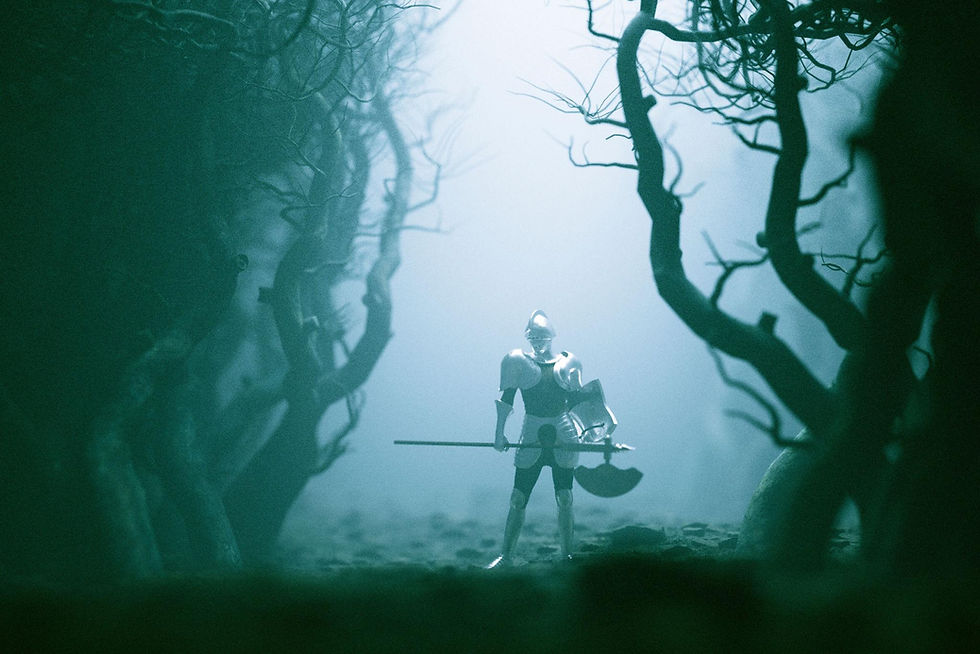
When I found him, I came without armor or weapon. If you need those, you’ve already admitted uncertainty. And there he was, not as a beast, but a survivor. One of mine. A long distant echo of something that should have been erased but wasn’t and for whatever reason, survived that timeline I had left long ago. I tried, briefly, to understand how much of our kinship remained. He answered with violence. That is what happens when something is shaped by isolation instead of structure. So I ended it. I took his arm, his literal arm, not out of anger, but because the situation required closure. It was inefficient, honestly. I would have much preferred a conversation.
Of course, things seldom end cleanly. His mother came next, and history did what it always does, it flat out lies. They called her a monster, not knowing who she truly was: disciplined, grieving, and precise. When I followed her into her domain, I realized quickly that I was no longer in control of the environment, she was. And for a moment, a real eye-opening one, I understood that she could end me. Not because she was wild, not because she was the monster history wanted her to be, but because she was focused and grieving the lost of her son. In the end, it wasn’t strength that decided it. It was access and opportunity recognized. An ancient blade, already there, became the difference. That’s how most victories actually happen, not through destiny, but through leverage.
When I returned, Hrothgar simplified it all into something palatable. Hero. Monster. Victory. Men need their stories to be clean, so they don’t have to think too hard about what actually happened. I let him have it. Control isn’t about correcting the narrative, it’s allowing the useful version to spread. I stayed long enough to stabilize things, to become something they could depend on, and then I left the same way I always do. Quietly, but with a story loud enough to cover the truth. A dragon, this time. Why not? If they need an ending, give them one they won’t question. If you leave here with anything it should be that the things you are taught to fear are rarely monsters. They’re usually just survivors who were never given a seat at the table.
Comments